A brief explanation
In my last post I described our long and eventful journey to India, hoping for a miracle cure for my childhood narcolepsy at Muktananda’s samadhi shrine. But I realised I never properly explained what an ashram actually is. If you’re not familiar with Hindu or yogic traditions, you might be wondering: Is it a temple? A yoga retreat? A commune? A hippie hideaway?
The short answer: An ashram is a spiritual community or hermitage where people come together to live, practise, and deepen their spiritual life under the guidance of a teacher (often called a guru or swami).
In the early days of Siddha Yoga there were two gurus — Chidvilasananda (Gurumayi) and Nityananda — who inherited the lineage from Swami Muktananda. Even though the guru wasn’t physically present at the Sydney ashram where we first became involved, it still operated as a real ashram, following the same core principles. There were full time residents who followed the daily schedule, as well as visitors like my parents and I who went to the evening programs, held a few times a week.
A Simple Breakdown
Think of an ashram as a spiritual village or intentional community. The word “ashram” comes from Sanskrit and traditionally referred to a place where a spiritual teacher lived with their disciples. Over time, it evolved into something broader.
In modern times, an ashram is usually a place where:
- People live together (some permanently, many for short retreats or stays)
- Daily spiritual practices happen — meditation, yoga, chanting, prayer, and selfless service (seva)
- There’s a strong focus on discipline, simplicity, and inner growth
- A central teacher or lineage provides the spiritual direction
It’s part monastery, part spiritual school, and part intentional community.
What Daily Life in an Ashram Actually Looks Like
Most ashrams follow a structured daily schedule. When we arrived at Gurudev Siddha Peeth in Ganeshpuri, a large sign painted on the wall before the main courtyard made it very clear: you were entering a serious place for spiritual practice. If you weren’t willing to follow the rules and schedule, you might be asked to leave. Everyone was also given a small cardboard booklet with the daily timetable.
Here’s roughly what a typical day looked like (times are approximate):
- 6:00 am — Morning chanting of the Guru Gita (the central Sanskrit text in Siddha Yoga), followed by a shorter devotional chant.
- 7:30 am — Breakfast at “Amrit,” a large covered western-style restaurant area. They served baked goods, “sour cereal,” and other dishes while Muktananda’s chanting played softly in the background.
- 8:30 am — Seva (selfless service). Everyone was assigned a daily job — cleaning, gardening, helping in the kitchen, or other tasks to serve the ashram.
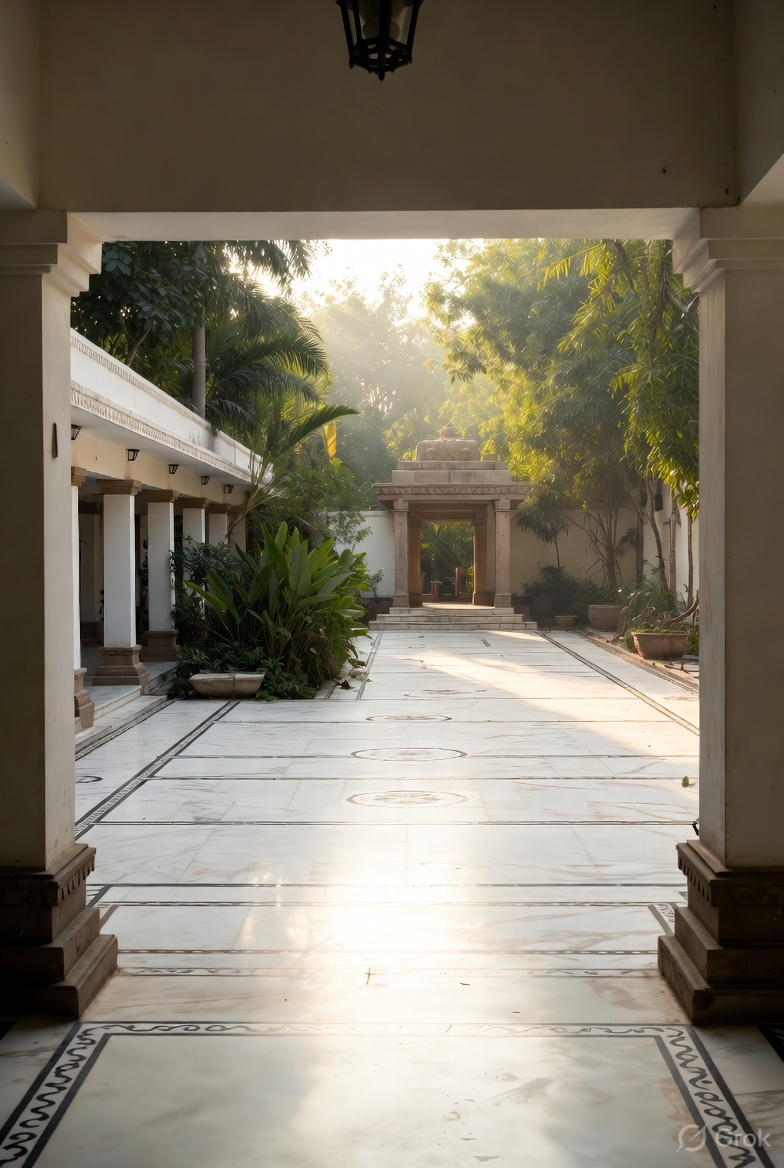
- 11:00 am — Darshan in the central marble courtyard — a time to sit quietly in the sacred space.
- 12:30 pm — Lunch. You could eat traditional Indian food sitting on the floor in the big dining hall or choose a more western-style meal at Amrit.
- 1:30 pm — Rest time (often a nap or light chores).
- 2:30 pm — Afternoon seva.
- 6:00 pm — Dinner.
- 7:00 pm — Evening chanting in the beautiful marble-floored hall.
- 8:30 pm — Back to your room or bedtime.
The whole day was intentionally full — either doing seva or participating in spiritual practices. You also had to carve out time for your own personal meditation.
Even with the strict schedule, there was still plenty of normal human connection: chatting with people while doing seva, sharing meals, and meeting interesting visitors from all over the world.
Different Types of Ashrams
Not all ashrams are the same:
- Traditional Indian ashrams (like Ganeshpuri) tend to be more austere, focused on discipline, renunciation, and long-term practice.
- Modern or Western ashrams are often more comfortable, offering yoga retreats, workshops, and shorter stays.
- Online ashrams have also become common in recent years.
Some welcome short-term visitors, while others expect deeper, long-term commitment.
Why Do People Go to Ashrams?
People are drawn to ashrams to deepen their meditation or yoga practice, escape the noise of everyday life, live in a supportive spiritual community, receive guidance from a teacher, or simply experience a simpler, more intentional way of living.
For some it’s a refreshing reset. For others, it becomes a lifelong spiritual home.
A Personal Note
When we first stepped through the grand stone arch into the white marble courtyard at Ganeshpuri — with the statue of Bhagavan Nityananda sheltered under the giant cobra hood — I felt the weight and beauty of the place. Even as a nine-year-old boy dealing with narcolepsy, I could sense there was something special and serious about being there.
That first ashram experience left a deep impression on me. The structure was demanding, the rules were clear, and yet there was also warmth, laughter, and connection with people from every corner of the globe.
A Gentle Disclaimer
This post is simply my personal recollection and reflection on my experiences as a child in Siddha Yoga during the early to mid-1980s. Memories can be subjective, and others who were part of the same community at the time may remember events differently.
I have written this from my own perspective with honesty and respect. It is not intended as a definitive historical account of Siddha Yoga, the SYDA Foundation, or any individuals involved.
If you are currently exploring spiritual paths or considering joining any organisation, I encourage you to do your own research, trust your intuition, and make decisions that feel right for you.
Thank you for reading my story.
If you are finding my posts interesting, please subscribe at the bottom of the main page so you can be informed via email of future posts.





Leave a comment