Why I’m Writing This
This blog is an attempt to tell the story of my spiritual life as I have actually lived it.
Not as a teaching.
Not as a warning.
Not as a manifesto.
But as a record.
Over the years I have moved through many spiritual worlds.
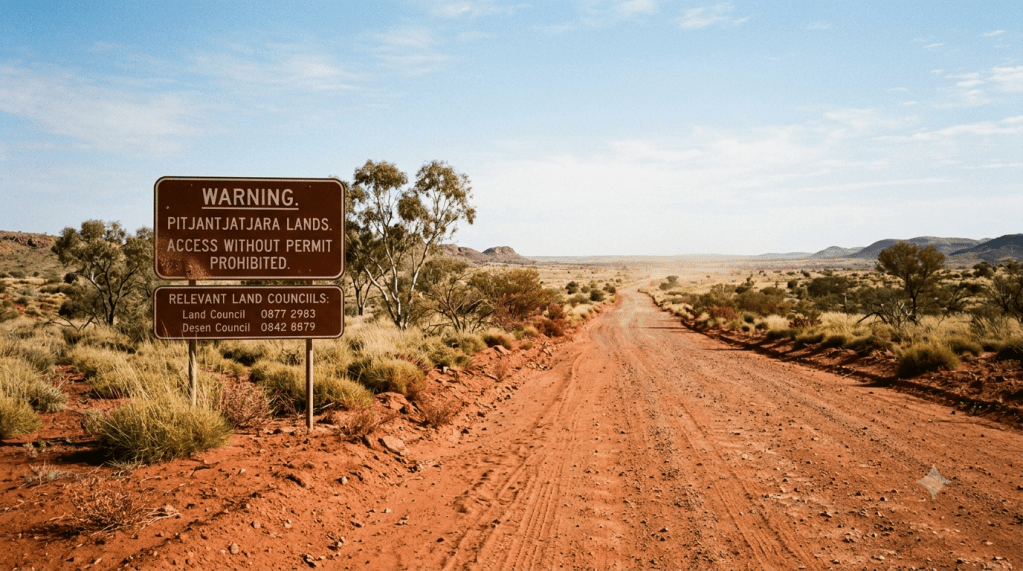
I have studied within formal religious systems. I have immersed myself in intense spiritual communities. I have been drawn toward warrior-oriented paths that presented themselves as guardians of truth — from martial disciplines such as Shaolin and Ninjutsu to occult groups training the subtle body for an anticipated spiritual apocalypse. I have lived in an ashram in India, rising before dawn and falling asleep within the steady rhythm of devotion to a Guru. I have studied ancient Vedic fire rituals in Varanasi, standing before sacred flames that have burned in that city for centuries. I have travelled to central Australia seeking healing from an Aboriginal sorcerer beneath an immense and indifferent sky. I have learned and practiced a wide range of eastern and western esoteric traditions in my never ending search for hidden spiritual knowledge and wisdom.
A significant chapter of my life was completing an Honours degree in Studies in Religion at Sydney University, where I attempted to understand religion and spirituality from both the inside and the outside at once — as participant and observer, believer and analyst. I was trying to reconcile devotion with critique, experience with interpretation.
From a distance, my path may appear scattered — like a spiritual vagabond moving from one camp to another. But in hindsight, these were not random detours. They were sincere searches. I was not drifting. I was seeking.
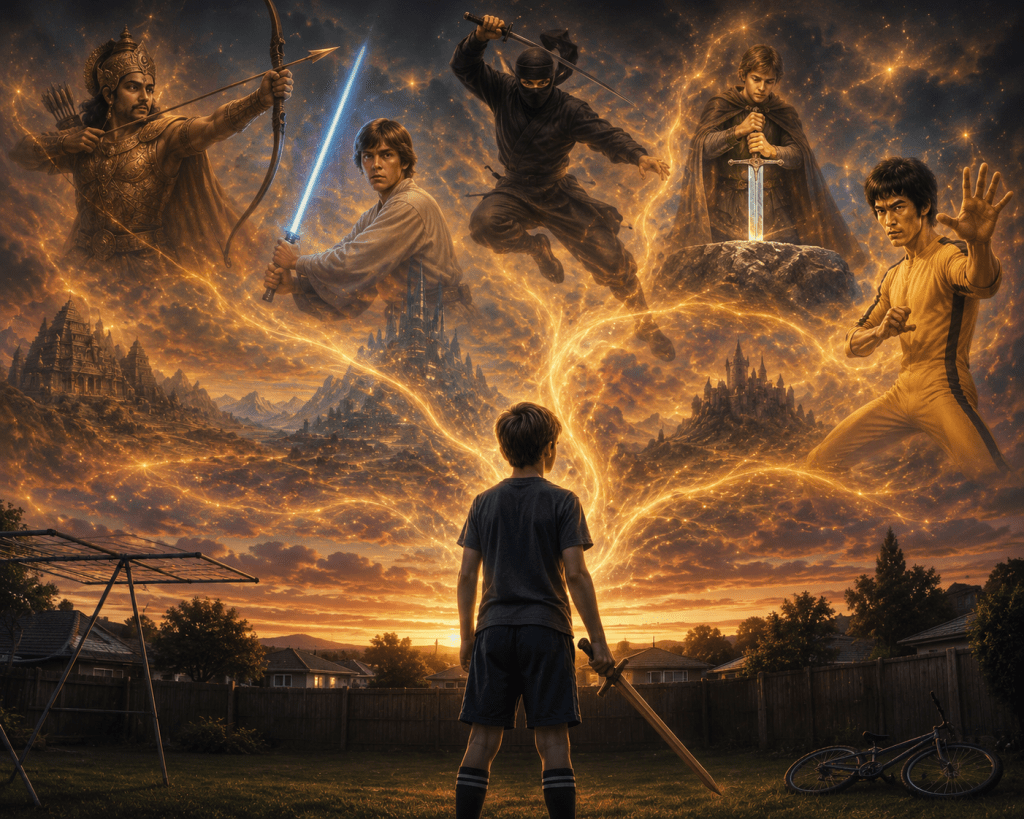
I was seeking spiritual experience — hidden wisdom, transformative knowledge, something beyond the surface of ordinary life. I was seeking healing. I was seeking the world of magic and masters I first encountered in my father’s books as a child. Later, I explored practical magick, experimenting with rituals and spells in an attempt to influence and shape reality itself. I wanted to know: was there more? Could it be accessed? Could it be directed? Could my life be reshaped through deeper laws?
Threaded through all of this — beneath the systems, the teachers, the practices, and the experiments — was my relationship with God.
My understanding of what “God” is has changed many times. As a child, God was a presence I sensed watching over me. Later, God became a force — a cosmic intelligence, an impersonal Absolute, a field of consciousness underlying all phenomena. At different times I experienced the Divine as personal and intimate; at other times as vast, abstract, and beyond form. Sometimes I felt guided. Sometimes I felt tested. Sometimes I felt painfully alone.
Yet through every shift in theology, one thing remained constant: my orientation toward the Sacred.
Even when I was experimenting with magick, even when I was immersed in sectarian structures, even when I was disentangling myself from manipulative authority, my faith did not disappear. It evolved. It deepened. It became less dependent on intermediaries and more interior. Less dramatic, perhaps — but more real.
If anything, the trials strengthened it. The image of God shifted; the relationship endured.
Beneath the outward movements of my life were deeper currents. My upbringing shaped me. My parents’ influences shaped me. My temperament shaped me.
So did my narcolepsy.
Living with narcolepsy altered my experience of consciousness in unusual and sometimes destabilising ways. Altered states were not abstract ideas for me. I often felt as though I lived with one foot in the visible world and one in the dreamworld — navigating sleep paralysis, vivid imagery, lucid transitions, and shifting states of awareness as part of ordinary life. The boundary between waking and dreaming was not always firm.
Much of my spiritual journey became an attempt to understand — and at times master — these liminal states. I joined groups and sought teachings from self-proclaimed masters across diverse traditions. Quietly, I was testing each system: does this practice affect my dreams? Does this lineage influence my sleep? Does it carry power into the inner realms where I already dwell?
A particularly intense chapter unfolded when I joined a Taoist sect in recent years. Despite my academic understanding of charismatic authority and cult dynamics — and my prior experiences — I entered this environment willingly. Over three years I endured sustained spiritual and psychological pressure, including humiliation and coercive control. I tried to be a devoted disciple. I dedicated myself to the lineage. Gradually, however, the experience eroded my confidence and inner steadiness.
Then something shifted.
One day, something in my heart moved decisively, and I left — cutting contact completely. What followed felt like a profound internal reordering. My sense of self returned. My strength resurfaced. I began rebuilding my life from the inside out.
During that period, I found myself drawn to collective tarot readings online. Many of them seemed to echo themes I had just lived through — manipulation, entanglement, liberation, backlash. Whether synchronicity, projection, psychological pattern recognition, or something more mysterious, the experience remains part of the tapestry of this story — something I continue to contemplate without needing to resolve completely.
Looking back across all these chapters, I see a recurring archetype: the hero — the spiritual warrior — or perhaps more honestly, someone who longed to be one. I was repeatedly drawn to movements that framed existence in mythic terms: light and dark, battle and awakening, corruption and purity. There is something intoxicating about inhabiting a narrative where your life is cast as a sacred mission.
Over time, my experiences in non-ordinary states crystallised into techniques and inner capacities I developed through years of experimentation, struggle, and what I interpreted as spiritual conflict in unseen realms. Some of these experiences felt empowering. Others now invite careful re-examination. All of them shaped me.
Some chapters of this journey were beautiful.
Some were formative.
Some were costly.
Some were confusing.
Some required me to dismantle convictions I once defended passionately.
This blog will trace those journeys — the institutions, the ashrams, the teachers, the systems, the friendships, the disillusionments, the breakthroughs, and the quieter realizations that emerged when the intensity subsided.
If there is a single thread running through it all, it is this:
My life has gradually pushed me toward spiritual self-sovereignty.
Not isolation.
Not cynicism.
Not a rejection of tradition.
But a reclaiming of inner authority.
A recognition that no teacher, system, lineage, or movement can own my conscience, interpret my experiences for me, or stand between me and the Divine as I encounter it.
I am not writing to condemn anyone.
I am not writing to expose secrets.
I am not writing to recruit anyone away from anything.
I am writing to understand the pattern of my own life — and perhaps to offer an honest account of what it looks like to move from devotion to discernment, from immersion to independence, from seeking authority to accepting responsibility for one’s own spiritual ground.
This story is not finished.
It is still unfolding.
But I am ready to begin telling it.
BTW, I now have other blog posts where I start at the beginning of my life and early childhood, with spiritual influences from my parents and a medical condition which left me with a doorway to altered states. I have seen a lot of people reading this first post but not looking at any of the others. It is just the early stages, but will get more interesting. I want to do an open and honest account so gotta start there.


 Journey of a Spiritual Vagabond
Leave a comment