During the period when my brother’s situation was placing enormous strain on our family, my father happened to see a newspaper article about meditation groups operating around Sydney. One of the groups mentioned was the Siddha Yoga organisation, which was offering introductory courses for people interested in learning meditation.
My father had always been interested in spirituality and had collected many books on the subject over the years. Around that time my mother had begun occasionally looking through some of those books herself, perhaps searching for some way to cope with the anxiety and emotional turmoil she was experiencing. When my father saw that Siddha Yoga was offering beginner meditation classes, he suggested that she might find the course helpful.
To his surprise, she agreed.
The classes were being held quite close to where we lived, in the Sydney suburb of Greenwich. The main ashram of the movement in Sydney was being renovated at the time, so the introductory course took place in a small meditation room inside the home of a young married couple who were running the local centre.
At the first class my mother was given the mantra Om Namah Shivaya, an ancient Sanskrit phrase meaning “I bow to the divine within.” The meditation practice itself was simple. She was instructed to sit quietly and repeat the mantra inwardly, again and again, bringing her attention back to it whenever her mind wandered. It was a very straightforward technique, but like most meditation practices, simple did not necessarily mean easy.
My mother, however, took to it with remarkable intensity.
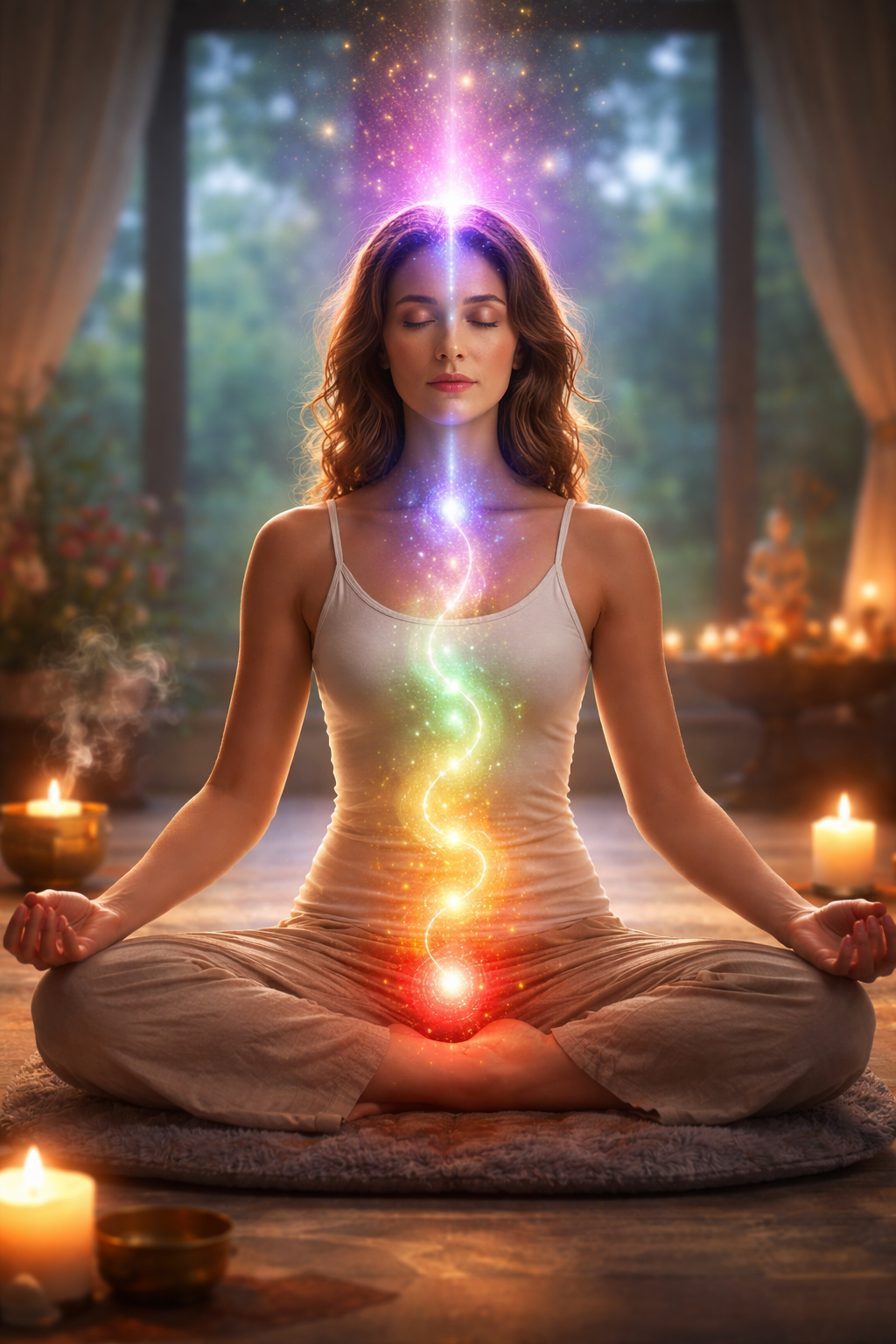
Within only a few days of beginning the practice she started having powerful inner experiences. In the teachings of Siddha Yoga these experiences were described as the awakening of kundalini, a latent spiritual energy believed to lie dormant at the base of the spine. According to the tradition, when this energy awakens it rises through a series of subtle energy centres, or chakras, along the spine and eventually culminates in profound spiritual realisation.
For my mother, the change was dramatic. After months of anxiety and emotional turmoil, meditation suddenly brought her into states of deep bliss and peace. She felt as though she had been lifted out of her suffering and into something sacred and transformative. Because she had always been religiously inclined, she interpreted these experiences as a direct encounter with the divine.
Meditation quickly became the centre of her life. She would sometimes sit for hours at a time absorbed in the practice, feeling powerful currents of energy moving through her body and waves of joy and devotion arising during meditation. Later she described the first year and a half of these experiences as her “spiritual honeymoon,” a period when everything felt filled with grace and meaning.
Not long after she began meditating, one of the leaders of the movement visited Australia. This was Swami Chidvilasananda, one of the successors to the movement’s founder, Swami Muktananda. She was conducting what the movement called an “Intensive” at the Sydney ashram — a weekend program of meditation, chanting and spiritual instruction.
My mother attended and came home deeply moved by the experience. She felt she had encountered someone extraordinary. From that point onward her commitment to the Siddha Yoga path grew rapidly.
My father, who had been pursuing spiritual ideas for many years in a more intellectual way, became curious about the experiences my mother was having. He decided to explore the practice himself and attended an Intensive of his own. While he found the teachers engaging and the atmosphere inspiring, he did not experience the same dramatic inner states that my mother described. His path into the movement was therefore more gradual and reflective.
Nevertheless, Siddha Yoga soon became an important part of our household. My parents began attending meditation meetings and programs regularly. Photographs of the guru appeared around the house, and the smell of incense became a familiar presence in the rooms. They also adopted a vegetarian diet, which the movement encouraged as part of a spiritual lifestyle.
At the time I was still a child and only dimly aware of what was unfolding. Looking back now, however, I can see that this small meditation course in a quiet house in Greenwich marked the beginning of a major new chapter in our family life.
What began as an attempt to help my mother cope with a difficult period soon drew our whole family into the world of Siddha Yoga. It would shape the direction of my parents’ lives for many years — and my own as well





Leave a Reply