One of the most important influences in my early spiritual life was my father’s bookshelf. Long before I joined spiritual groups or met teachers, I was surrounded by books on magic, mysticism, and hidden worlds.
My father had been interested in spirituality and the occult from an early age. He visited libraries and bought spiritual books whenever he could, and many of these became part of the environment I grew up in. A lot of them were classics that many spiritual seekers of that time would have recognised.
I began reading these books at about the age of eight. A year later I developed narcolepsy, and suddenly many of the strange ideas I had read about seemed less abstract and more personal. My understanding of what I was experiencing was shaped in part by these early readings.
According to my father, I also paid close attention when he discussed such things with my older brother. Much of our kitchen-table conversation revolved around dreams, magic, spiritual masters, and a hundred related topics.
From him I first learned about the idea of the astral body and the possibility that people could travel outside their physical bodies. Several books on this subject stood on his shelves.
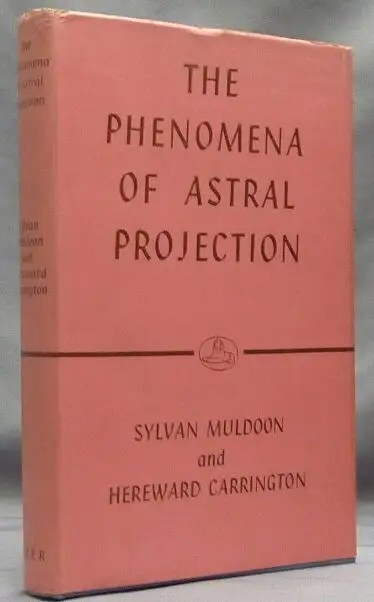
One of these was The Phenomena of Astral Projection, by Sylvan Muldoon and Hereward Carrington. Muldoon claimed that he could leave his body at will and had carefully studied the forces involved in the process of exiting and re-entering the physical body.
I remember reading this book with fascination. The illustration plates showed the physical body lying down while the astral body appeared at various stages of separation, connected by a cord running from the back of the astral body to the front of the physical one.
I was particularly intrigued by the idea of the “cord-activity-range” — a region of about five metres around the body within which certain hidden forces supposedly controlled movement and activity. According to Muldoon, once one intentionally pushed beyond this range, it became possible to travel freely at the speed of thought to distant places.
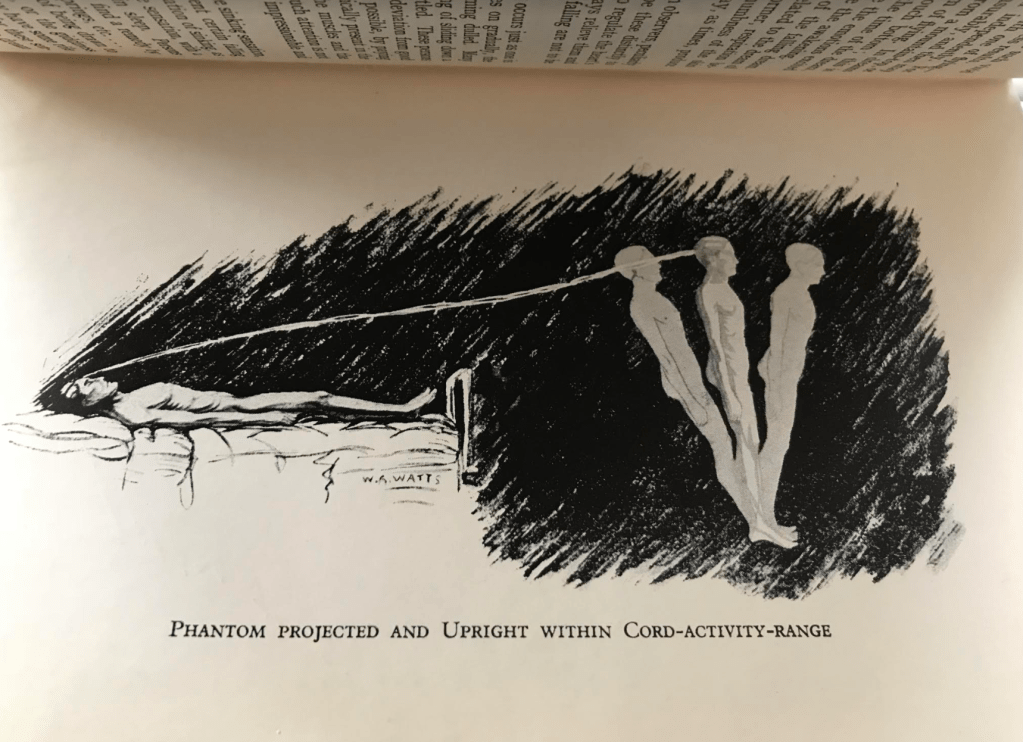
He suggested that during ordinary sleep most people’s astral bodies floated unconsciously within this cord-activity-range, dreaming without becoming aware of their astral condition.
The book described various methods for becoming conscious in the astral state. Muldoon also argued that falling dreams occurred when the astral body was suddenly pulled back within the cord-activity-range due to some disturbance in the physical environment. At the time, this explanation made a great deal of sense to me.
Another of my father’s books was Journeys Out of the Body by Robert Monroe.
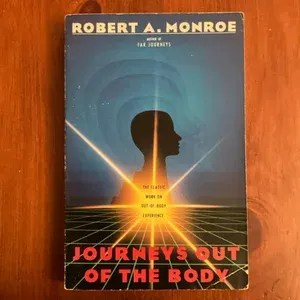
In this book Monroe described how he had accidentally discovered a method for inducing out-of-body experiences by playing slightly different sound frequencies into each ear. The resulting effect, which he called hemispheric synchronization, was supposed to bring the two sides of the brain into alignment.
After listening to these tones, Monroe reported finding himself floating near the ceiling outside his body. He later went on to found the Monroe Institute and produced many Hemi-Sync recordings and programs.
In my teenage years I experimented with some of these recordings myself, with interesting results that I may describe later in this story.
At the time I first read these books, I was also struggling with the daily effects of narcolepsy. I often passed directly from waking into dreaming states. The intermediate phase was frequently disturbing. Like many narcoleptics, I experienced episodes of sleep paralysis accompanied by vivid hallucinations that felt completely real — sometimes involving threatening figures or presences.
Reading these books helped me understand more about the processes surrounding sleep and dreaming. They gave me a framework that was very different from the purely medical explanations.
I remember experimenting with some of the techniques described in these books. Monroe recommended a method in which one moved awareness in a wave backwards and forwards through the body, gradually increasing the sense of vibration until it became possible to “pop out.”
I tried this method and it was one of the first times I deliberately used visualization involving my own subtle body. Because of the natural tendencies created by narcolepsy, I was often able to enter altered states quite easily. I could sense and feel my “body” in unusual ways, although I never experienced the clear sensation of floating outside my physical form as Monroe described.
I also experimented with some of Muldoon’s methods. One involved visualizing oneself lying on the floor of an elevator and rising out of the body as the elevator lifted upwards.
There was another book belonging to my father that came from some magical order. It described a method of imagining a duplicate of oneself floating outside the body and then transferring consciousness into it. Unfortunately I can no longer remember the title.
Another important book on my father’s shelves was Man and His Bodies by Annie Besant.
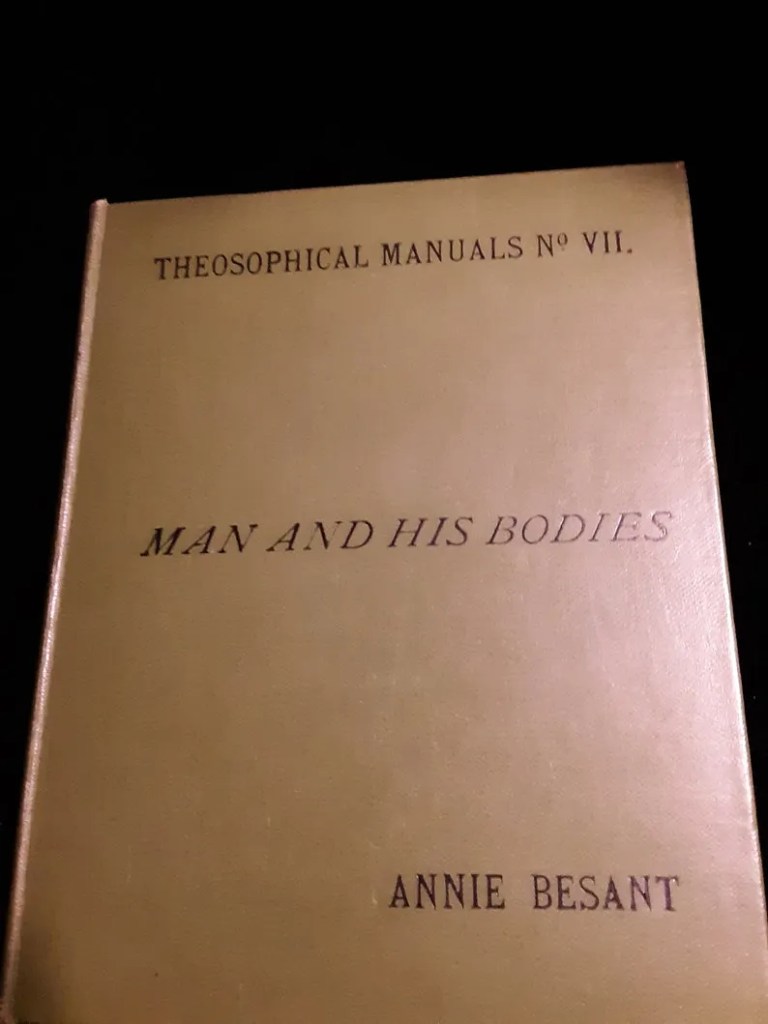
It was a small pink book that outlined the Theosophical teaching on the subtle bodies of the human being. This was where I first encountered the idea of the physical, etheric, astral, and mental bodies and the way they were said to interpenetrate one another during waking life.
According to this system, the process of sleep involved the partial separation of these bodies, and dreaming reflected their changing relationships.
It was the first structured explanation I encountered for experiences that already felt familiar to me. It is a classic work on the subject and one I may revisit someday.
These books helped me develop a framework for understanding what I was experiencing with narcolepsy. They encouraged me to approach my condition from a spiritual perspective rather than seeing it purely as a physical disorder.
From a conventional medical viewpoint, the experiences I had were described as hypnagogic hallucinations and episodes of sleep paralysis.
But through the lens of those early books, they seemed to point toward a wider and more mysterious landscape of consciousness.
Looking back, my father’s bookshelf was my first spiritual training ground. Long before I met teachers or joined spiritual groups, those books quietly shaped the direction of my life.



 Journey of a Spiritual Vagabond
Leave a comment