The Influence of My Parents
To understand my own spiritual journey, it is necessary first to understand something of the two people who shaped my early life. Before I began consciously searching for spiritual truth, powerful influences were already at work in the background of my childhood.
In many ways, the foundations of my later searching were laid long before I was old enough to make deliberate choices.
My Father
My father had a difficult childhood.
His father, Wally, worked in logistics for the Australian Air Force in the Middle East during the Second World War. My father was born shortly after Wally left for overseas service, and for the first four years of his life he grew up without his father present.
His full name was Walter Nelson, and when I was growing up there were stories that our family were direct descendants of the famous Admiral Horatio Nelson, who won the Battle of Trafalgar. In recent years I confirmed this through genealogical research. The lineage, as the saying goes, was “on the other side of the sheet,” descending from the children of Nelson and Lady Hamilton. Whatever fortunes were once attached to that name never made their way down our branch of the family.
Wally returned from the war in 1946, and my father suddenly found himself living with a man who was essentially a stranger — a man who was quick to discipline him harshly. By 1947 Wally had died of kidney failure, apparently linked to his service overseas.
My grandmother Norma soon met another man, also an ex-Air Force serviceman. He had been a navigator in Lancaster bombers during the war, and his aircraft was shot down over Belgium.
I remember him vividly from my childhood. He was a cheerful man who always had people laughing.
He told stories of parachuting into a field and landing among cows after escaping from his burning aircraft. By day he hid and survived on turnips, moving only at night. Eventually he was discovered by friendly locals who smuggled him along an escape line into France.
In France he was hidden in a coffin beneath the floorboards of a house and secretly fed by the family who sheltered him. If the Germans had discovered him, the entire household would have been publicly executed.
He later joined the French Resistance, taking part in night raids on German positions. I remember him describing how they would slowly drag hand grenades into place using wire or rope, detonating them from a distance.
Eventually he survived the war and rode a bicycle into newly liberated Paris shortly before the Allied forces arrived. After debriefing, he returned to Australia.
Before marrying my grandmother, he had a daughter named Yvonne. When he and my grandmother began their life together, both children were sent away — Yvonne to Ireland and my father to boarding school in Melbourne.
This separation became one of the defining events of my father’s early life.
Boarding School
My father attended a Jesuit boarding school — a strict Catholic institution where he quickly learned to navigate the harsh social hierarchies typical of such schools at the time.
One story he often told involved a prefect casually taking a large marble from his hand — a prized possession he had just traded for — and giving it to one of his favourites before walking away. Incidents like this deeply outraged him and contributed to a growing resentment toward the Catholic Church that would stay with him throughout his life.
He was frequently punished for refusing to flatter teachers or submit to the informal systems of favouritism that operated within the school.
He once described to me how he learned to dissociate during punishments — to mentally withdraw and be somewhere else while the punishment was being administered. He spoke of going into another place entirely, feeling less of the physical pain than he otherwise might have.
This capacity for dissociation was something he recognised in himself from an early age. He described becoming completely absorbed in imaginary worlds while playing with his toys, constructing elaborate battles in his mind while remaining oblivious to everything around him.
When the family later moved to Western Australia, he continued at boarding school and experienced much the same treatment, which was considered fairly normal in those days.
One of his saving graces was his physical strength and athletic ability. He excelled at sports and particularly loved Australian Rules Football.
Spiritual Interests
From about the age of ten, my father developed a strong interest in spirituality and the occult. He borrowed books from libraries and bought others from a specialist bookshop in Perth.
These books later became part of the environment in which I grew up.
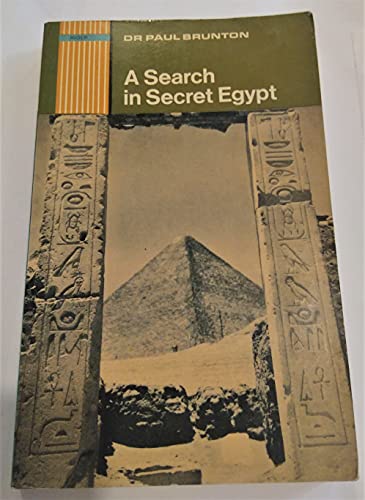
One author who had a profound influence on him was Paul Brunton, who wrote accounts of his travels in places such as Egypt and India, seeking out mystics, fakirs, and spiritual teachers.
My father was deeply inspired by these stories and in later years became a personal friend and occasional visitor to the elderly Brunton.
When I began reading his books myself, I too became enthralled by Brunton’s descriptions of hidden masters and unusual spiritual practices. I will probably devote an entire post to Brunton in the future, as he played an important role in shaping my early imagination.
My father did appreciate the academic training the Jesuit school provided. They were known for their intellectual rigour, something which proved useful when he later studied history at the University of Western Australia.
My father’s Honours thesis dealt with a subject of considerable controversy. He had discovered documents incriminating an influential Catholic political and religious figure of the time, B. A. Santamaria.
Over the years many copies of his thesis circulated, often without acknowledgment that he had been the one to uncover the material.
Following publication of the thesis, my father was approached by members of the Knights of the Southern Cross, a Catholic fraternity who saw themselves as defenders of their faith. They approached him and essentially threatened his life if he did not withdraw the publication.
He refused to submit to their demands.
Not long afterwards, my parents and my two older brothers left Australia for the safety of Canada, where they lived in Nova Scotia for two years.
My Mother
My mother grew up in a poor Catholic family in Perth.
She had been happy attending the local school, but her mother was told that a good Catholic parent should send their child to a Catholic school. Dutifully following this advice, she was transferred to a convent school run by nuns.
For my mother this was a deeply traumatic experience.
She described how the class would be lined up and told to hold out their hands while a nun walked along striking each child’s fingers with a stick. There was often no clear reason for the punishment.
My mother was naturally sensitive, and the experience affected her deeply.
Complaints at home brought little change. Her father drank heavily, and her mother was a strict and practical survivor shaped by a hard life and German heritage.
Different Reactions
Although both of my parents suffered under Catholic schooling, their responses were very different.
My father developed a lasting hostility toward the Catholic Church and organised religion in general.
My mother did not carry the same bitterness.
After finishing school she trained as a teacher and was by all accounts an excellent one. At that time Catholic female teachers were not allowed to remain in their positions after marriage.
After meeting my father at a dance and falling in love, she chose marriage over her career. It was a decision she never fully regretted, but she did miss teaching, and I think there remained some quiet resentment at being forced to choose.
Between my father’s fascination with hidden wisdom and my mother’s quiet inner strength, the atmosphere of my childhood was already shaped by forces I did not yet understand.
Long before I began consciously searching, the seeds of that search had already been planted.




Leave a Reply