My spiritual life did not begin with a belief system. It began with a medical problem.
As a nine-year-old, I had a whiplash accident playing cricket with the other kids in my street. Not long after, I began experiencing symptoms that didn’t make sense. I was exhausted in a way that sleep did not fix. I would fall asleep suddenly during the day. Sometimes I would lose muscle control when laughing or feeling strong emotion. My dreams became unusually vivid and intense. On many occasions, I would wake up, but the nightmares continued as if I were still asleep.
My parents noticed the dramatic change. They took me to chiropractors, dieticians, GPs, and a host of other practitioners. No one could explain what was happening. About a year after I started collapsing into sleep everywhere, an elderly doctor recognised the symptoms. They were textbook narcolepsy with cataplexy — a condition that would shape the rest of my life.
At the time, I did not experience this as mystical. I experienced it as disruptive. Embarrassing. Frightening. My body no longer behaved predictably. I could not rely on my own wakefulness. School, friendships, and daily life became complicated by something I could not control. I went from being a sporty, athletic kid to spending lunch breaks playing Dungeons & Dragons.
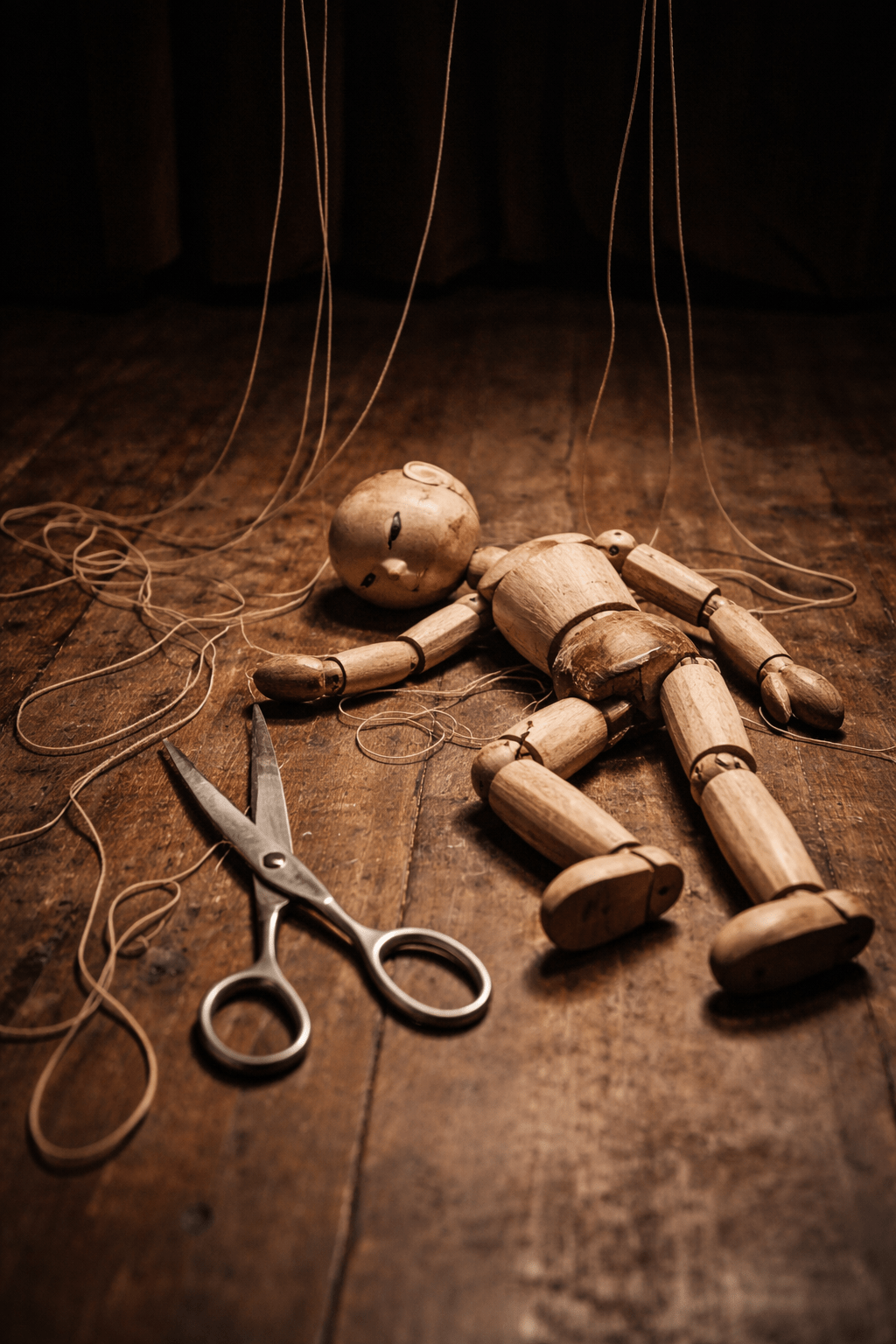
Cataplexy is like a puppet having its strings cut — except the puppet is your own body. It is a sudden loss of muscle control triggered by emotion, often laughter. Normally, this paralysis happens during dream sleep to stop us acting out our dreams. In narcolepsy, it can happen while fully awake.
At that time, my dad used to give me a wheelbarrow ride before bed. At one end of the house he would pick up my legs and I would walk on my hands down the hallway to my room. Then one night, halfway along the corridor, I face-planted. My arms simply stopped working. The laughter that had triggered it vanished instantly, replaced by confusion.
But alongside the disruption, something else was happening.
Narcolepsy is, in essence, the intrusion of REM sleep into waking consciousness. Unlike most people, who enter REM only after deeper stages of sleep, narcoleptics can move into dream states almost immediately. Because the boundary between sleeping and waking was unstable, I became familiar with states of consciousness most people only encounter occasionally. Dreams were immersive and emotionally charged. Sleep paralysis brought hallucinations that felt entirely real. Hypnagogic imagery — the strange visions that appear between waking and sleep — became part of daily life.
I did not interpret these experiences spiritually at the time. But they made it impossible to take ordinary reality for granted.
When consciousness itself feels unstable, questions naturally follow. What is real? What is the mind? Where do dreams end and the world begin? If perception can shift so dramatically, what else might be possible?
Looking back, this was the first destabilisation — not of belief, but of certainty. My body had become unpredictable. My experience of reality had widened beyond what my peers seemed to inhabit.
At the time, it felt like a curse.
I did not yet understand that it would also become a doorway.

 Journey of a Spiritual Vagabond
Leave a comment